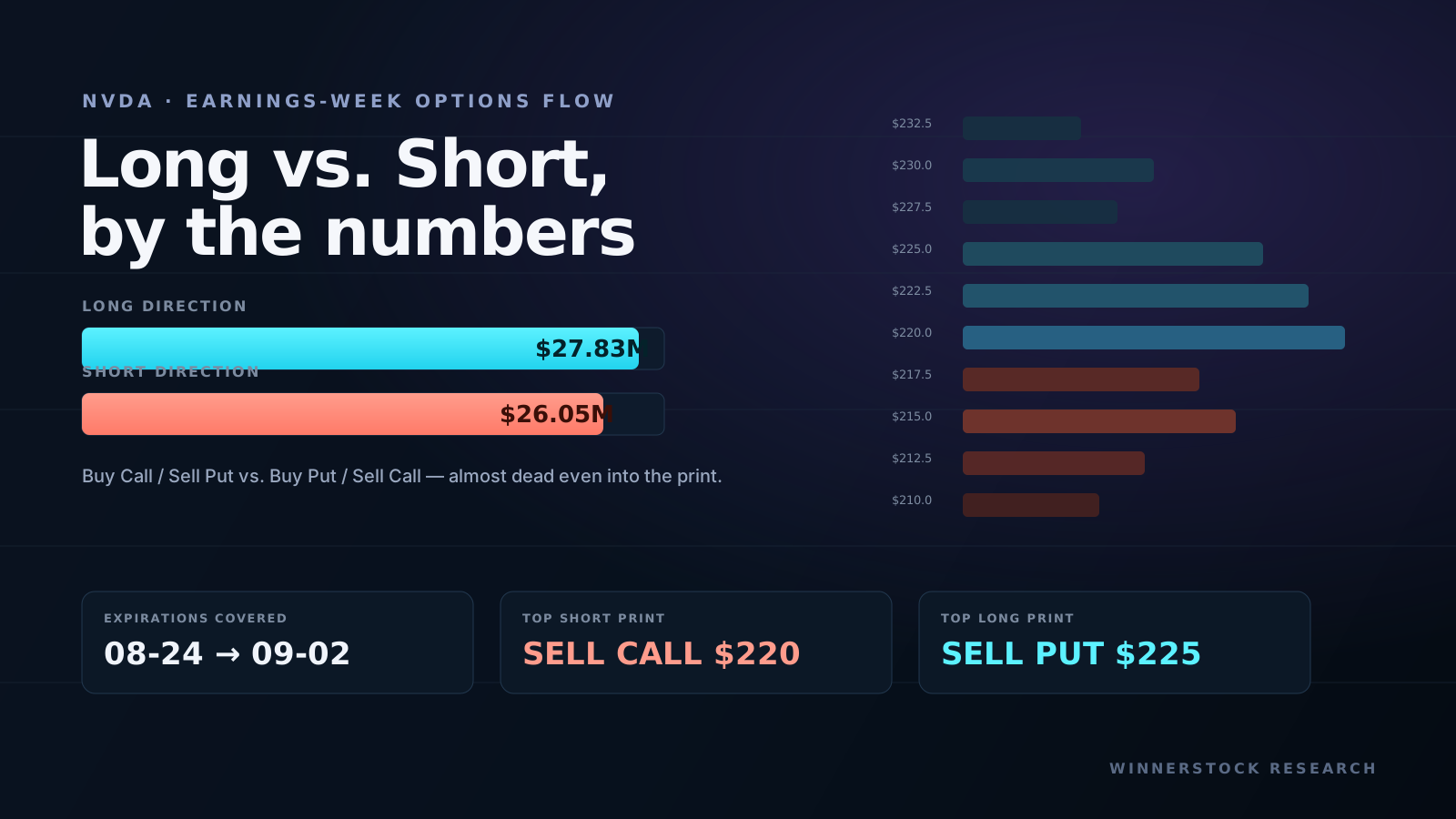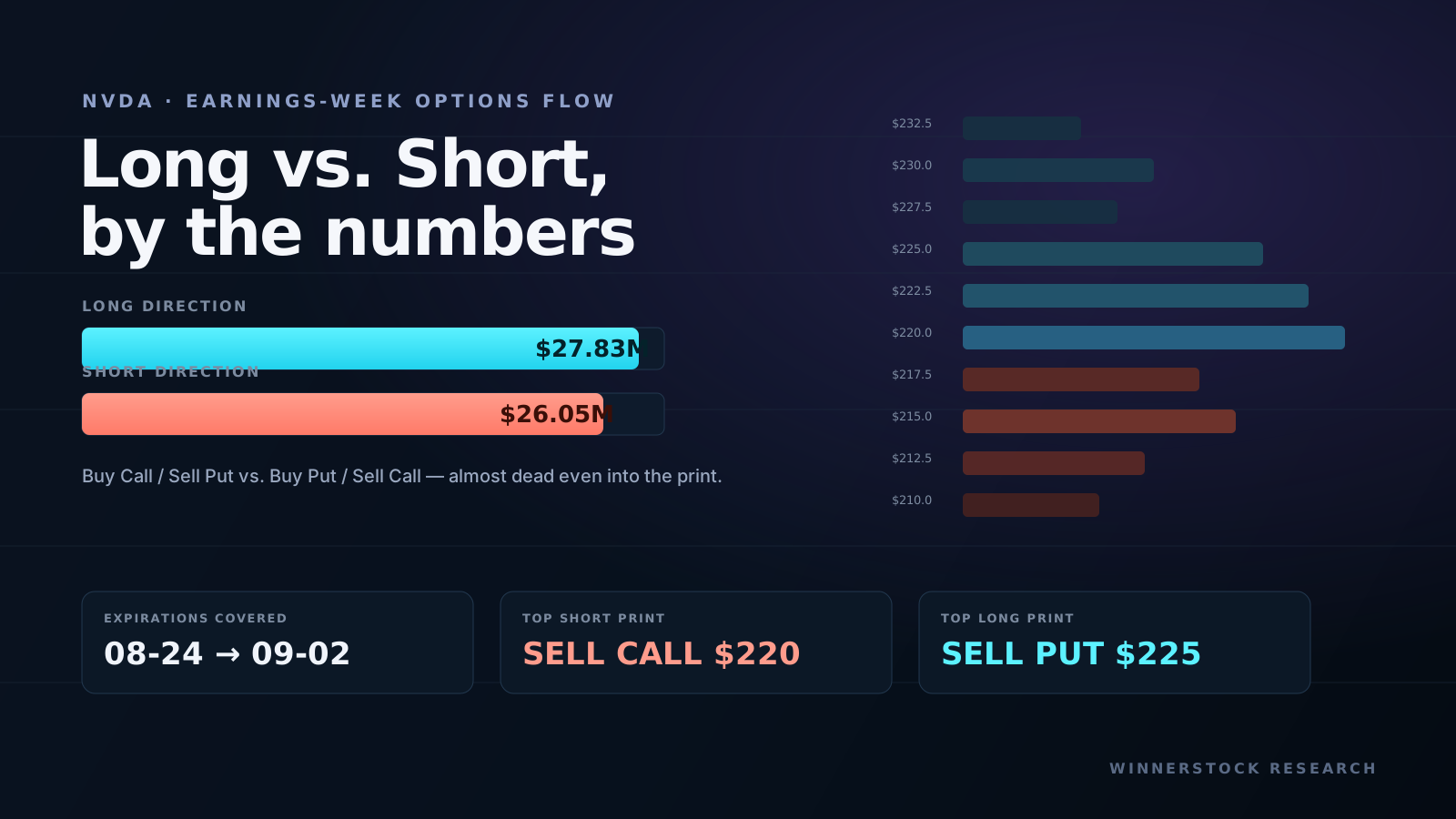
The size is concentrated. The direction isn't.
NVDA reports earnings on Wednesday, August 26. Across the three sessions before it (Aug 19–21), large options prints (≥50 contracts per print) across the four nearest expirations totaled $190.7M in notional — and 73% of that sat in one single expiration: August 28, the first full trading day after the print.
That concentration alone would normally read as a strong directional signal. But notional and open-interest change can't tell you who initiated a trade — a buyer opening a long call and a seller opening a short call (writing it for premium) grow open interest identically. To answer the actual question — is this flow betting NVDA goes up or down — this piece classifies every large print by combining option side with buy/sell aggressor:
- BUY CALL or SELL PUT — both are long-direction bets.
- BUY PUT or SELL CALL — both are short-direction bets.
The aggressor read comes from a production block-detection system that tracks NBBO quotes tick by tick and tiers each print by how it crossed the spread — a stricter method than eyeballing notional alone.
Long vs. short, top 3 each
Same-strike, same-direction blocks across the three days are summed. OI change is that strike's net 08-19→08-21 move — it isn't split by buyer/seller, because open interest itself doesn't carry that information.
Long top 3
| # | Combo | Strike | Expiry | Premium | Δ OI |
|---|---|---|---|---|---|
| 1 | SELL PUT | $225.0 | 08-24 | $4.28M | +5,222 |
| 2 | BUY CALL | $220.0 | 08-28 | $4.27M | +5,001 |
| 3 | BUY CALL | $210.0 | 08-31 | $2.26M | +2,165 |
Short top 3
| # | Combo | Strike | Expiry | Premium | Δ OI |
|---|---|---|---|---|---|
| 1 | SELL CALL | $220.0 | 08-28 | $2.94M | +5,001 |
| 2 | SELL CALL | $225.0 | 08-28 | $2.78M | +13,696 |
| 3 | SELL CALL | $210.0 | 08-28 | $2.66M | +415 |
The $220 call for Aug 28 shows up on both lists — Long #2 (bought) and Short #1 (sold) — the single most contested strike in the dataset, with real size on each side.
Reading the top prints
The single largest cluster over the three days is 4,920 contracts of the Aug-24 $225 put, sold on Aug 20 for $4.28M in premium — sell-side, a long-direction bet. That's not "buying protection ahead of earnings"; it's someone writing a large block of near-term puts and collecting the premium, comfortable being assigned stock at $225 or below (or already hedged).
The short top 3 is entirely SELL CALL, all three at the Aug 28 expiry ($220, $225, $210). Not a single BUY PUT print was large enough to crack either top-3 list — actual "buying puts to bet on a decline" isn't showing up at scale here. What's there reads closer to selling calls for premium than a direct bet that NVDA falls after the print.
One more print worth flagging even though it didn't get clustered into its own block by the production system: a 1,200-contract, $8.68M deep-in-the-money Aug 28 $145 call, built almost entirely in a single session with open interest and volume matching roughly 1:1. Checked against direction using a quote-proximity approximation, all 1,200 contracts were sold, not bought — SELL CALL, short-direction. Paired with an existing long stock position, that structure looks closer to "lock in a sale a bit above spot and collect a large premium" than to adding leveraged upside.
The real hedging is in the Aug 28 put ladder
At the heaviest-weighted expiry, call flow is close to a coin flip (48% buy-side), but the put side is 68% buy-side — and 98.3% of that put notional ($29.86M of $30.4M) sits in a tight ladder from $175 to $240, right around spot ($214.72). That's the shape of genuine protective buying, not premium-selling. A much smaller layer of deep out-of-the-money puts ($90–170 strikes) carries real contract count but only $0.22M of notional — cheap tail insurance, 61% of it added on the Friday before the print.
The one clear net-closing signal in the whole dataset is the Aug 28 $220 put, down 1,033 contracts over the three days — consistent with a near-the-money hedge being rolled down or taken off as spot drifted from $217.56 to $214.72 over the same week.
What this does and doesn't tell you
- Size is real and concentrated. 73% of all large-order notional across four expirations sits in the single session right after earnings.
- Direction is not one-sided. Long-direction and short-direction blocks are within about $1.8M of each other — roughly even.
- The two biggest individual prints were premium sales, not directional bets — a distinction that only shows up once you check buy/sell aggressor, not just notional.
- The genuine defensive buying is smaller and more targeted than the headline call notional suggests, concentrated in a tight put ladder around spot.
Educational only: This article is a statistical read of historical large-order trade and position data for one ticker ahead of one earnings date. It is not investment advice, a recommendation, or a prediction of NVDA's earnings result or price direction. Large options prints can reflect market-maker hedging, multi-leg spreads, and other non-directional motives; actual positioning intent should be cross-checked against additional information.